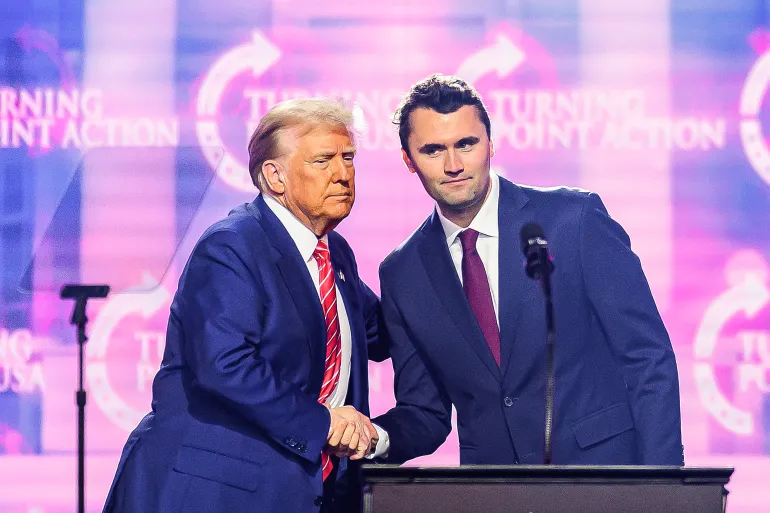
Charlie Kirk Biography: Powerful Rise, Influence, and Legacy Explained
Introduction to Charlie Kirk and His Political Influence
Charlie Kirk was an American conservative political activist, media personality, author, and nonprofit executive who became one of the most influential young voices in modern U.S. right-wing politics. He was best known as the co-founder and leader of Turning Point USA (TPUSA), a student-focused conservative organization that played a major role in shaping political engagement among young Americans.
Born in 1993, Kirk rose from suburban Charlie Kirk Illinois to national prominence through political activism, media appearances, and campus organizing. His work focused heavily on promoting conservative values, free markets, and limited government principles. Over time, he became closely associated with the broader MAGA movement and developed strong ties with major Republican figures, including Donald Trump.
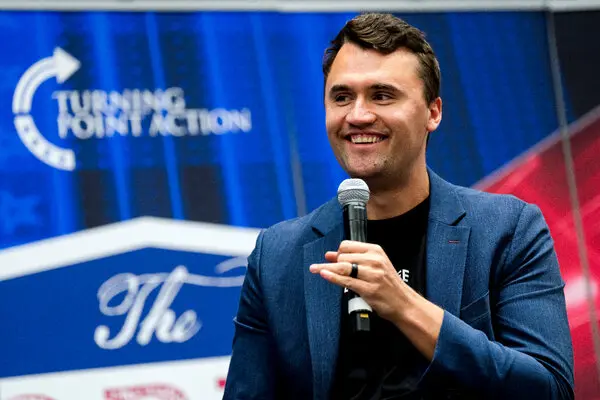
Early Life, Family Background, and Education
Charlie James Kirk was born on October 14, 1993, in Arlington Heights, Illinois. He grew up in a middle-class household in the suburbs of Chicago, where he was exposed to civic and political discussions from an early age. His father worked as an architect, and his mother was involved in mental health counseling, contributing to a stable and disciplined upbringing.
During high school, Kirk developed an interest in political debate and public policy. He participated in student activities and early political discussions, often expressing conservative viewpoints. He briefly attended Harper College but chose to leave early to pursue political activism full-time, believing that grassroots organizing would be more impactful than traditional education.
This early decision became a turning point in his life, marking the beginning of his transition from student to political organizer.
Founding of Turning Point USA and Early Activism
In 2012, at just 18 years old, Charlie Kirk co-founded Turning Point USA (TPUSA) alongside Tea Party activist Bill Montgomery. The organization was created with the mission of promoting free-market principles, limited government, and conservative values among high school and college students.
TPUSA began as a small nonprofit but quickly expanded due to strong donor support and aggressive campus outreach strategies. The organization focused on building student chapters, hosting events, and encouraging political engagement on campuses often perceived as liberal-leaning.
Kirk became the public face of TPUSA, traveling across the country to speak at universities and political events. His early activism centered on challenging progressive academic environments and encouraging students to question mainstream political narratives.
Rise to National Prominence in Conservative Politics
Charlie Kirk’s rise in conservative politics accelerated rapidly between 2015 and 2020. He became a frequent guest on television networks, podcasts, and political conferences. His communication style—direct, confrontational, and youth-oriented—helped him connect with younger conservative audiences.
By 2016, Kirk had become one of the youngest speakers at the Republican National Convention, signaling his growing influence within the Republican Party. He also developed close relationships with political figures aligned with Donald Trump, further strengthening his national visibility.
During this period, TPUSA expanded significantly, becoming one of the largest conservative student organizations in the United States, with hundreds of campus chapters and millions of online followers.
Turning Point USA Expansion and Political Network Growth
Under Kirk’s leadership, Turning Point USA grew into a major political organization with national reach. It expanded beyond college campuses into high schools and community activism programs. The organization also launched affiliated groups such as Turning Point Action and Turning Point Faith, broadening its influence into electoral politics and religious communities.
By the late 2010s, TPUSA had raised millions of dollars annually and attracted major conservative donors.
The organization also became known for its conferences, media productions, and political training programs designed to mobilize young conservative voters across the country.
This expansion solidified Kirk’s position as one of the most important youth political organizers in the United States.
Media Career, Podcasts, and Public Communication Style
Beyond organizational leadership, Charlie Kirk built a strong media presence through his podcast and radio show, The Charlie Kirk Show. The program focused on political commentary, cultural debates, and current events from a conservative perspective.
His communication style was highly opinionated and designed to engage emotionally with audiences. He often addressed topics such as education policy, free speech, government regulation, and cultural identity.
Kirk also became active on social media platforms, where his posts and commentary frequently went viral. This digital presence helped him reach millions of followers and significantly increased his influence beyond traditional political channels.
Political Ideology and Key Beliefs
Charlie Kirk was known for his strong alignment with conservative and right-wing political ideology, including support for free-market economics, limited government intervention, and traditional cultural values.
He was also a strong supporter of Donald Trump and the broader MAGA movement, advocating for policies related to immigration control, economic deregulation, and educational reform.
According to public records and analyses, Kirk also held controversial positions on topics such as civil rights legislation, COVID-19 policies, and election integrity debates.
His ideological stance made him both a powerful voice within conservative circles and a polarizing figure in national political discourse.
Controversies, Criticism, and Public Debate
Throughout his career, Charlie Kirk was frequently involved in public controversy. Critics accused him of promoting divisive rhetoric and contributing to political polarization in the United States.
Some of his statements on race, education, and social policy were widely debated and criticized by academics, journalists, and political opponents. His organization also faced scrutiny over its methods of campus activism and political messaging.
Despite criticism, Kirk maintained a strong base of supporters who viewed him as a defender of free speech and conservative values. This division contributed to his reputation as one of the most polarizing political figures of his generation.
Assassination and National Reaction
On September 10, 2025, Charlie Kirk was fatally shot while speaking at Utah Valley University in Orem, Utah, during a Turning Point USA event.
The attack occurred during a public campus appearance, shocking attendees and sparking immediate national attention. Kirk was transported to a nearby hospital but was later pronounced dead from his injuries.
Authorities later arrested a suspect, and the incident was classified as a targeted assassination.
His death triggered widespread reactions across the political spectrum, with both supporters and critics condemning political violence.
Memorial Service, Public Mourning, and Organizational Impact
Following his death, a large memorial service was held on September 21, 2025, at State Farm Stadium in Arizona, attended by more than 100,000 people.
The event included political leaders, supporters, and public figures paying tribute to his influence on American politics. His organization, Turning Point USA, also experienced a surge in membership interest following his death.
His widow, Erika Kirk, later assumed leadership of TPUSA, continuing the organization’s operations and public mission.
This transition marked a significant moment in the continuation of his political legacy.
Legacy, Influence, and Long-Term Political Impact
Charlie Kirk legacy is deeply tied to the growth of youth conservative activism in the United States. Through Turning Point USA, he helped build one of the largest political student networks in the country, influencing how young conservatives engage with politics.
His media presence, organizational leadership, and ideological messaging left a lasting impact on modern American political discourse. Supporters view him as a transformative figure who energized conservative youth engagement, while critics argue that his influence contributed to increased political division.
Regardless of perspective, Kirk remains a significant figure in discussions about political activism, media influence, and youth engagement in the United States.
Conclusion: Final Understanding of Charlie Kirk’s Life and Influence
In conclusion, Charlie Kirk was a major figure in American conservative politics whose career spanned activism, media, and organizational leadership. From founding Turning Point USA at a young age to becoming a national political commentator, his influence grew rapidly over a short period.
His life included both major achievements and significant controversies, making him one of the most debated political activists of his generation. His assassination in 2025 further intensified discussions about political polarization and violence in the United States.

Related Posts

Hazel Vorice McCord Biography: Untold Life Story, Family Legacy, and Inspiring Van Dyke Family History

Sophia Laforteza Biography: Inspiring Journey, Katseye Leader, and Global Pop Breakthrough Story